Skip to content

Upton Village

South Oxfordshire

  • Home
  • News
    • ‘Upton News’
    • Village News
    • Welcome to Upton
    • Local News
    • St Mary’s News
    • Obituaries
    • Didcot News
    • Oxfordshire News
    • Theatre Club News
    • Village Hall News
    • Wine Club News
    • Youth News
  • Events
  • Parish Council
    • Annual Reports
    • Council Decision Making
    • Council Finance
    • Council Lists and Registers
    • Members and Employees
    • Policies and Procedures
    • Priorities and Plans
  • Amenities
    • Postal Services and Local Post Offices
    • St Mary’s
    • The George at Upton
    • Village Hall
  • Organizations
    • Afternoon Drop In
    • Film Club
    • Friends of St Mary’s
    • HUGS
    • Karate Club
    • Oil and Gas Syndicates
    • Tea Birds WI
    • Wine Appreciation Club
    • Inactive Organisations
      • 50s Club
      • The Upton Coven
      • Theatre Club
      • Village Volunteers
  • Information
    • District and County Council Information
    • Upton Recreation Ground Rules
    • Travel
  • History
  • Photos

The Humfreys

December 2, 2008

Peter Humfrey has contacted us having found the web site while researching the history of the Didcot, Newbury and Southampton Railway and the station.

Peter suspects that the Joseph Pomfrey referred to in the Inclosure Award might actually be Joseph Humfrey, one of his ancestors.
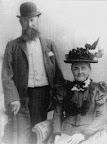
Nathaniel Humfrey

Nathaniel Humfrey

In 1841 Peter’s great grandfather Nathaniel had a farm of about 250 acres, and by 1881 owned 1355 acres. He even created a new breed of sheep, suited to conditions on the nearby Downs. The railway company bought land from Nathaniel in 1863 who ensured that the station would be in Upton and not in Chilton! He built Upton Lodge in about 1870 and moved there from the Manor House. Nathaniel’s sisters Blanche and Mercy moved to The Elms (newly built) and were joined there in 1943 by Flora – who left Stocks the day Harry Slade died in 1943 and never went back. Peter and his father Ewan were the first to re-enter the house nearly 20 years later, and found that breakfast was still on the table! Peter’s grandparents lived in the old Brookside.

You can find photographs of the Humfreys which Peter has kindly provided in the photo galleries under People and Old Upton.

Filed Under: History

The Railway

April 10, 2007

Work began on the construction of the Didcot to Newbury railway in August 1879. The first sod was turned by the Countess of Carnarvon at a site just outside Newbury.

The estimated cost of building the line was £397,484. This cost was higher than it needed to be as the decision was made to build what was seen as branch line to main line standards, with gradients of no more than 1:106 (50ft per mile) and curve radii not less than 60 chains thus enabling the high speeds necessary to make the line competitive. The line was to be built single track with passing places at most stations but it was also decided that all bridges, cuttings and embankments were to be constructed such that a second line could be added as traffic increased. This decision was particularly significant in this area where approximately 414,000 cu. yards of chalk were excavated from Upton cutting and used to build the Hagbourne embankment.

According to the Newbury Weekly News of 4th August 1881:

In the Upton cutting that is some 2 miles long and up to 40 feet deep a steam “navvy” is being used to tear away at the chalk with its three steel teeth: the chalk is then scooped into a bucket capable of holding about a ton: when full, the bucket is swung round to dump its load into a waiting wagon. The wagons are then pulled back through the cutting to be emptied further down the line where the Hagbourne embankment is being constructed. About 400 wagons are moved every day but the embankment is of such heavy nature that progress is only 30 yards per week. After the “navvy” has scooped out the cutting the walls stand almost perpendicular and have to be sloped by hand.

Up to 300 men worked on the construction of the line that took 2½ years to complete.

Filed Under: History

The Pilgrim family and Upton

February 26, 2007

Guy or Henry Ellcock Pilgrim
Henry Ellcock Pilgrim

These notes were compiled by Richard Pilgrim’s step-daughter, who lives in Abingdon.

The Pilgrims moved to Upton in 1923. I assumed this was to Prospect House but have found mention of Hedgewell. Blue Cottage was built by them in the 1930’s (for another relative?) and a big “book room” was added when they sold Prospect House.

Guy and Beatrice Pilgrim lived in Upton until they died – Guy in September 1943 and Beatrice in August 1954 (both are buried in Upton).

Henry Guy Ellcock Pilgrim D.Sc London (photo) was born in Stepney, Barbados, in 1874, and educated at Harrison College, Barbados & University College, London. Henry worked in India on Geological Survey 1902-30 (Superintendent 1920-30). In 1908 he married Beatrice Wrenford in Calcutta (photo). He seems to have been an eminent paleontologist – see his obituary.

Richard Wrenford Pilgrim (known also as Bob) (photo) was born in 1912 in Brighton, and educated at Wellington College and New College, Oxford, where he received a BA, and MA in History. After WW2 he was a W.E.A. lecturer in Oxford and the surrounding area, using the train to Upton to return to Blue Cottage where he lived with his mother.

When she died her sister Ida Kate Wrenford, a retired school teacher, lived there until she died in September 1960. The cottage was then let until sold in 1962.

When the Pilgrim connection with Upton ended, Richard was buried there in his mother’s grave in 1979 where later his wife, Constance, was buried in 1996. Richard studied at St Stephen’s House, Oxford (1953-5) and was ordained in 1955. He was Curate at Wolvercote, and Vicar of Wootton, Berks (1957-64). During this time he made frequent visits to Upton to see his aunt or Gwennie (Miss Greenough?) who had been associated with the family since days at Prospect House. My mother also visited her at Fieldside when she returned to live near Abingdon after Richard’s death.

Filed Under: History

Blast, there goes the bridge

January 9, 2007

A newspaper account of the demolition of Upton railway bridge – date and source unknown.

Upton Railway Bridge, which took a year to build in 1881, was blown up in a split second today.

Upton Railway Bridge

Iron bars laid on the bridge to contain the explosion fly in the air as Upton Railway Bridge is demolished.

The 60ft. high bridge carrying the Wantage to Reading road over the Didcot to Newbury line was blown up by gelignite packed into it by employees of the Witney Stone Company, a subsidiary of Ameys.

To avoid blasts and fragment damage to the station house and bungalows on the other side of the bridge, chain-link fencing was laid on the bridge and tarpaulin sheets were hung over the parapet. Traffic is being diverted while a new section of road is being buil at a lower level.

Many Upton villagers turned out today to see the end of the bridge. One man said he used to do his courting under it after the last train from Newbury had passed. Two elderly brothers who used to lean over the bridge watching the trains go by didn’t come. “I don’t think they could bear it.” someone said.

Filed Under: History

Query from Australia

January 3, 2007

We have received the following email from Vern Butler in Australia:

“My name is Vern Butler. I am a third generation born Australian. My G Grandfather William Butler was born in Upton on 18th June 1839 to Daniel & Sarah nee Smallbone who operated the George & Dragon Inn from 1840s to 1900. William married in Wytham in 1860 and migrated to Australia in November of that year. Your web site has been a great help to me with several of the Butlers mentioned in the history pages.

“Several years ago I completed a book on William and his Aust descendants and am now attempting to write the family history of the Butlers and their life in Upton in the 19th century. I think I have sorted out William’s siblings but I am confused with the relationship of some of the Butlers in Upton in the 1840s.

“The purpose of this email is to enquire if there is a local history group or historian who would be prepared to assist me sort out the various Butler families in Upton.”

If you can help Vern, please contact the webmaster…

Filed Under: History

Notes on Upton

October 2, 2006

A talk by Mr F. M. Underhill, 12th September 1971.

ANTIQUITIES

Roads and Trackways

The Ridgeway (possibly the most ancient road in England) passes a few hundred yards south of the Parish boundary. The Icknield Way runs through the upper part of the village, but its course has been diverted, its ancient line may be seen by the angle of the frontage of the George & Dragon to the modem road.

It followed the northern boundary of the Rectory land, passing up the hill in front of the Rectory gates where there was a junction with the Portway running up from the “Horse & Harrow”. The Icknield Way traversed Hagbourne Hill, north of Hagbourne Hill Farm and so to West Hendred Down.

The Lynch Way and Alden Farm Road are two very ancient tracks leading from the village up to the Downs. Both are cut in the hillside quite deeply, forming Hollow Ways in part of their course. Hollow Ways were supposed by some to have been purposely constructed so that movement of men to higher ground could not be observed from a distance. It is more likely that the Upton examples were man-made for easy access to wheeled and other traffic, the tracks have been continuously deepened by the daily passing of men and animals in former days.

No very ancient remains have yet been found in the parish beyond the note of “stone rings” discovered in a pit to the East of the Lynch Way and so marked on the 6 inch OS. map.

ANGLO SAXON BURIALS

In 1958 a burial was found when digging a trench in the orchard adjacent to “Aethelstan” on the High Street. Mrs Chitty reported the grave to be dug in the chalk under 4 ft of made-up ground. It contained an extended skeleton with head to the West and feet to the East. There was an iron shield boss and a fragmentary iron knife. The knife remains in the Ashmolean Museum but the other material cannot at present be found in the museum. Mrs Chitty reported that a break nearby in the section of the trench suggested the existence of another grave, destroyed before records could be made. (Nat. Grid Ref 41/514886. Oxoniensia XXIII (1958) p.138.

In 1960 a further (?Anglo Saxon) grave was found some 20 ft north-east of the 1958 find spot. This was an extended inhumation, the head to the West, I have a photograph but apparently nothing was found with the body. (Oxoniensia XXV, 136, Nat. Grid Reference 41/5 14866).

From 1969-71 fragments of Norman pottery have been turning up in the garden of my bungalow “Turstins”, High Street. (Nat. Grid Reference 41/514867.SU58 N.W.) These fragments comprise at present of at least 8 different pots, there are also pieces of C16th – C19th later wares, stems of clay pipes etc. The earlier fragments closely resemble pieces of similar pottery found at Blewbury in 1937 by the late Cmdr. J.G. Bower at “Chapmans”.

There is a distinctive pinkish-brown paste, probably wheel-made with a roulette stamp. It is comparable to Rhineland influenced rouletted ware. The other large portion of rim is blackish-grey paste, with some minute flint added along with larger pieces, the top of the rim has a characteristic fmger indented “pie-crust” surface. It is almost certainly wheel-turned.  (See Berks. Arch. Journal XLIII (1939) Pt. 1, p.22)

On 1st November 1970 I recovered two pieces of similar blackish-grey ware and a later piece of red ware from the upturned foundations of the new house now completed in Fieldside Road. This second find indicates further occupation of the period in the village and I would like to hear of more finds of this type of pottery. There should of course be Saxon pottery as well to be found, assuming that there was late Saxon occupation (see below).

About 1891 but before 1894, the Rev. R Hooper notes a “fermail” (or shoe buckle) found in Upton Churchyard “in possession of Mr Hughes” (see his notes in MS attached to his set of  1″ O.S. maps sheet 253 Abingdon).

Before 1970 a C14th Jetton or casting counter was dug up in the garden in Fieldside Road. This is now in my possession thanks to Mrs Pusey who kindly brought it to my notice along with some C17-C19th pottery from the same garden.

In 1960 a hoard of 7 silver coins of Eliz. 1, Jas. 1 & Chas 1 were unearthed beneath the foundations of three old cottages demolished close to the old Methodist Chapel on the East side of the High street. This was probably the homestead of Pitts Close, a small holding which extended on the whole length of High Street from the Icknield Way down to the Manor House, it is so marked on the Inclosure Map. The coins, excepting one 6d piece of Eliz. 1, which the finder retained, are now in Reading Museum. There was some confusion at the time of the find about the actual spot from whence the coins came out, an incorrect reference placed them in the roadside bank at the junction of High Street and the main road, this has now been corrected following conversations with Mrs Knight and Mrs Chitty.

THE FIELD SYSTEM AND INCLOSURE

The Open Field System was generally prevalent throughout Berkshire in medieval times, it was largely based on a two-field practice. At Upton it is noticed in 1337-8, in the time of Edward III.

In prehistoric times little was known of the fertility of the ground, the primitive agriculturalist cleared and ploughed a given area for a period until its yield fell off, he then allowed it to return to nature while he broke fresh ground. In medieval days it was known that the soil must be rested periodically. Thus the village community would always clear and cultivate more land than was needed for next years food. The land was farmed in regular rotation, part of it being under crop, the rest remained fallow, in alternate years. This was known as the “two field” system.

Our knowledge of primitive agriculture comes from the so-called “Celtic Fields” – small earth banked enclosures on the Downs; they show up well on air photos (Streatley Warren) and can be observed from the ground. They are now rapidly disappearing for ever under modern methods of heavy earth moving in cultivation. The Downiand parishes along the line of the Icknield Way all show high lands to the South and a lower and flatter area where the village usually stands, to the North. This situation prevails for all the parishes from Ashbury to the Astons, Upton included. In prehistoric times the wooden ploughs were not strong enough to turn the heavier soils in the Vale, thus the first settlements were all on the higher Downland, this from Neolithic times. It was not until the Saxons settled permanently after the Roman era that the system changed. Pasture now became all important for the Downs, the cornlands were on the drier and flatter parts of the Vale. Today the situation is reversing again, for the Downs can be cultivated with success due to modern fertilizers. The names Starveall, Coldharbour and Skeleton Farm, formerly very descriptive, no longer apply.

Leading up to this state of affairs were the Inclosure Acts from the 18th century onwards. These brought about change in the agricultural system, large areas of wasteland were brought into use. Previously a farmer would find himself cultivating a number of small unconnected strips of land covering a wide area. The Inclosure Awards settled the land attached to each central holding, bringing into being large farms with enclosed fields, now being expanded to even greater size.

HOLDERS OF UPTON LANDS

It is worth considering some of the names connected with the parish, they are part of its history and in remembering them we can find the origins of many properties and place names still extant.

The first landowner at Upton, known by name, was Brictric, he was here at the time of Edward the Confessor. He appears as a considerable landowner in the County of Berks (assuming it was the same man all the time), he held, besides Upton, lands at Brimpton, Hungerford (North Standen), East Shefford, Childrey (Freethornes) Sparsholt and Coleshill. At the Norman conquest we find “Turstin”, son of Rou (or Rolf) in possession of most of Brictric’s holdings. At the time of Domesday (1086) Turstin held Upton, Childrey (Freethornes), Sparsholt (Westcott), and Coleshill. He had also many manors in Buckinghamshire, Hertfordshire, Hampshire and Herefordshire.

We know nothing of his origins, his name suggests a Scandinavian parentage – the Normans were of course originally Norsemen. He could have joined William the Conqueror for the invasion of Britain, rendering the King valuable services for which he was awarded many English manors, including those of Britric, a thegn who with very many others from Berkshire and elsewhere, stood fast and perished at the Battle of Hastings.

The main Upton Manor passed, soon after 1086, from Winebald of Baalun, who almost immediately granted part of his new holding to the Priory of Bermondsey. This Priory kept the Upton estate until the Dissolution of the Monasteries in the 16th Century when the Crown annexed it. Queen Elizabeth granted it to Michael and Edward Stanhope. It passed to Robert Boswell who in turn sold it to Sir Thomas Vachell of Coley Park, Reading in 1636/7. The Vachells held it until 1693 when Tanfield Vachell sold it to Charles Ambrose of Wantage. In 1755 it belonged to Henry Tompkins and it was sold by him to John Phillips in 1769.

Another part of the Manor, separated and called Upton Russell remained in the possession of the Russell family until the close of the 14th Century, when in 1388 Sir Maurice Russel sold his portion to John Latton. He, in 1401 granted it to Thomas Chelsey and his wife Elizabeth. Thomas died in 1407 and his widow Elizabeth married Sir Thomas de la Pole but she died shortly after this. The property was held in trust for a daughter Sybil who married Thomas Beckingham, there are Beckingham entries in the parish register. The Manor passed by inheritance to the Windsor family whose monuments you may see in East Hagbourne church. It came into the possession of James White of Putney and by 1758, Upton Russells was owned by William Keat – their names are also in the Upton Register. Keat sold it to John Phillips who thus acquired both the main Manor as we have seen and the part called Upton Russells. John Shawe Phillips sold it to Nathaniel Humfrey in 1866, it is probable that the Humfrey family were already tenants of the Manor house before they purchased the property outright.

A third part of Upton Manor called Upton Moels was held by a family of that name who owned other Berkshire properties. Nothing is known of this part of the Manorial estate after 1484 when it became part of the Manor of Nottingham Fee in Blewbury. If you look at the map of Upton parish you will fmd 112 acres of land in the extreme north-eastern are abutting on to Blewbury, this could probably have been the land comprising the Manor of the Upton Moels. You must remember that a Manor was an estate of land in one ownership, it did not necessarily have to include a Manor house. All that was needed was some central place where the rents from the tenants could be collected and a “Manorial Court” held where the law and custom of the Manor could be enforced at a meeting held regularly of the tenants. The meeting place for Upton Moels could easily have been held in Blewbury.

A Fourth Manor in Upton belonged in 1227 to James Newmarch, it was held by the heirs of John of Upton, being the inheritance of John’s wife. This has been identified with the estate of Walter Latton who was living about 1300. John Latton was living in Upton in 1228, holding a tenament of Bermondsey Priory, that family took their name from the place of Latton in Wiltshire. A Thos. Latton owned Upton Manor at his death in 1503. His son John lived at Chilton but was buried at Blewbury, you may see his brass memorial with two wives and 15 children in the south chapel of the church there, dated 1548. His will is preserved at Somerset House, the family claimed connections with the Percys, Isberys and Stuteville families as shown by the arms on the brass. The last Latton connection with Upton was in 1584 when Ann Latton bequeathed 40/- for the repair of the church. The estate passed to the Fullers and Humfrey and came by marriage to the Caudwells of Blewbury.

We now come to the 19th Century when most of the property and land in Upton (and some in Blewbury) belonged to the Humfrey family, in particular to Nathaniel Humfrey who was a very successful farmer. In 1862 the Chapelry of Upton with Aston Upthorpe was separated from the parish of Blewbury by Order in Council dated 7th June. The Rev. Richard Hooper was appointed Perpetual Curate of Upton and Vicar of Aston Upthorpe where he remained until his death in 1894. The population of Upton was then about 300 having increased from 217 in 1801. It reached its peak in 1881 when the railway was constructed. Many of the navvies on the work lived here temporarily, they brought the total up to 475. By 1900 it had fallen again to 213.

The story of Mr Hooper’s ministry at Upton would occupy a separate talk, there is ample material extant. Suffice now to say that he at once set about walling the churchyard – previously it had been open unfenced land, all the Upton people being buried at Blewbury.

Mr Hooper raised money for building the school on land given by Mr Shawe Phillips who, you will remember, was at that time engaged in selling Upton Manor to Nathaniel Humfrey. Mr Thomas Humfrey gave land on which Upton Rectory was built, money was raised on mortgage to purchase the “Rectory field” opposite on which the stables were built, now recently sold for the new bungalow. This particular piece of land was as you may know called “Adnams Grave” on the old Tithe map, perhaps the burial place of a former owner or even a suicide!

Mr Hooper was instrumental in having our church restored in 1885. This was particularly fortunate for in his associations with the learned and cultured world he knew Mr Slingsby Stallwood, Architect and Antiquary of Reading who was responsible for carrying out the renovations. Although the east end was entirely removed and reconstructed, all the other ancient features were carefully repaired and retained, even the font which was almost broken up, was taken to Wantage and cemented together, a new base being made for it from Mr Stallwood’s designs.

Today we still have the Manor house and one or two old cottages but the focus of the village has been changed by building houses in Fieldside Road and the moving of the shop and Post Office there. Formerly the High Street could show the commercial centre with, in addition to the shop, the bakery and the smithy. The closing of the school will be another break with the past, but we are still a largely self-contained community and I hope this state of affairs may long continue.

F.M. Underhill, Upton, 12th September 1971.

Footnotes

  • The parish was formerly part of Blewbury, formed into a separate parish in 1862. It comprises some 1413 acre. (VCH Bks. III. 280 et.seq.) [Victoria County History, A History of the County of Berkshire: Volume 3]
  • The village is built about a labyrinth of by-roads and lanes which are mostly hedged on either side, forming the boundaries of the orchards. (VCH).
  • The cottages are built of half-timber and brickwork, but wattle and daub are used as infilling between timber-framing. The exterior of the Jacobean Manor House is described, including the fine staircase.
  • “Skeleton Farm” was formerly the residence of the Gammon family. William Gammon was once tenant of the manor house which he sold to John Phillips in 1769.
  • “The line of the Portway runs through the village” is incorrect, it is the Icknield Way but the Portway joins it.
  • Field names in Upton: Milham (C11th), Ham Acre, The Wells, Grumbles Mere, Braid Ditch Furlong and Rixes.
  • The Upton Inclosure Award dated 1759.

Filed Under: History

In the Mercury Country

October 2, 2006

Taken from the Mercury Oxford Gazette, Newbury Herald and Berks County Paper Saturday April 23rd 1955.

IN THE MERCURY COUNTRY – UPTON

Domesday Hamlet’s Importance As Junction Of Ancient Tracks

Upton has small significance today, surrounded as it is by better known villages including Blewbury and the Hagbournes, and it was for a long time a mere dependent hamlet and chapelry. Nevertheless it can claim place in the Domesday Survey as “Optone”, and its situation on the route of the Icknield Way, where other tracks form a junction and a direct major route leads up to the Ridgeway, indicates that in very ancient times it had importance for the traveller. Its church of St. Mary’s has what is almost certainly a Saxon doorway, and as St Birinus is said to have made one of his earliest exhortations to the Saxons on nearby Churn Knob it may well be that Upton church sprang directly from his ministry.

Brictric held Upton in the reign of Edward the Confessor, and Turstin, son of Rolf, after the conquest, these lands passing shortly after 1086 to Winebald of Baalun; he gave part of them in 1092 to the Clunic Priory of Bermondsey, which retained what was known as Prior’s Barne until the Dissolution. The Crown then took over. In 1600 Queen Elizabeth granted the manor to the Stanhopes; it was sold in 1636 to Sir Thomas Vachell, of Coley the family keeping it for more than half-a-century. By 1770 however, the separate manorial rights had apparently been merged with a manor called Upton Russels, which Winebald had given to his daughter on marriage; Isobel Russel in 1219 and the Russels remained owners until 1388, when John Latton bought it. Another manor, Upton Moles, was held by the De Moles from about 1219 until the latter part of the 15th century, while a fourth manor has been traced from the 13th century.

Railway Improvement

Hagbourne Parish first claimed the hamlet, Blewbury afterwards, and it gained separate ecclesiastical and civil status in 1862. Its population, now about 240, can never have been large, although it was swollen for a while during the building of the Didcot-Newbury railway line, upon which Upton was given a station opened in 1883. This station, once a blessing to the remote community, is little used at the present day although it would no doubt became very popular were the county itself more widely publicised. For here is a gateway to one of the loveliest and most facinating areas in the whole of Berkshire. Following the “Hollow way” which passes through the village from quaintly named Frog Alley and up the watery Stream road, then crossing over the main highway which here keeps to the line of the Icknield Way, you may climb a clearly indicated track into the heart of the brooding hills, to where the Ridgeway stretches as for thousands of years; to the prehistoric domain of Churn Knob, with its “fairy guarded” tumuli, to Grims ditch, to Lowbury’s Roman camp and The Slad and Roden downs, when many finds have led experts to think that here existed, yet to be rediscovered, a Roman city. History lies here excitingly, challengingly. We have mentioned the “fairys” of Chum Knob; when barrows were being investigated here in 1815 and also fifty years before, a thunder storm held up operations on both occasions! The fairy folk could be kind when they chose, it seems, for tradition has it that a ploughman who broke his share found it mended when he returned next day. You may refresh yourself at an Inn of character, the George and Dragon, before exploring Upton, which holds much for those who delight in well thatched roofs, sturdy old timbering, mellowed brickwork, and a Church in the true british tradition. Soon there will be added attraction in the blossom of extensive orchards which border the village.

A Vanished Pound

The Forge, which curiously had a bakehouse attached, is now a private house; Pound Cottage indicates the site of a vanished pound; Stocks Cottage, a dream of a place in its herringbone brickwork and thatch, stands opposite where a buried stone marks the former position of the village stocks. Owlscote Farmhouse is picturesque, partly Elizabethan and partly 17th century, with a fine timber-framed outbuilding. Upton Lodge, solitary on its eminence above the main road is Jacobean in origin and retains that appearance despite alterations. [The writer of this article has rather over-enthusiastically invented a Jacobean house which stood on the site of the present Upton Lodge. In fact, Upton Lodge was built by Nathaniel Humfrey in 1875 on open ground.]

Apart from the crude Saxon like doorway it possesses, the church is in it s oldest early 12th century and has a small graceful chancel which brings our Norman ancestors very close. The main doorway is Norman, so is the plain tub font. A heavy oak chest stands in the vestry, and the quaintest little organ in the nave. Regrettably, all the old memorials in the church have gone. We noted with interest the churchyard grave of Moses Anger and his wife Ellen, who died in 1910 within a few weeks of each other, both in their 83rd year; and remembering that the local halt was opened in 1883, found sad the tombstones side by side of 14 years old Daniel Howson and his brother Edward, aged 21, both of whom lost their lives in accidents on the railway works, the boy in November of 1880 and the young man the following July. How these two tragedies shocked the village.

Ravaged by Fire

Upton shared a cruel blow in 1934, when fire ravaged the village centre, destroying two farms with five big barns and other buildings. For ten days the wreckage smouldered, said Mr. E. D. Butler, who owns the excellent store and post office which alone serves Upton from within, and which has arisen amidst the several modern houses erected on the burnt-out site. There was almost another disaster in 1940 when an enemy plane dropped a 500 lb. bomb and 600 incendiaries one Sunday evening. Fortunately the high explosive missile dropped just outside the village, and the incendiaries claimed only two ricks.

Mr. Butler, now 48, was born at Upton and educated at its tiny school. His father and grandfather, both farm labourers, lived here; when his grandmother was left a widow with 11 children, only two of whom were working, she maintained her family by making shirts, recieving 7d. per garment and having to find her own buttons! After much weary hand sewing she was able to buy one of the earliest sewing machines, which later the firm begged back as a curio.

Opposite the shop, he also told us, is to be erected soon a new Methodist Church to serve a growing congregation: this will replace a church 100 years old.

Hill Discoveries

Hagbourne Hill is so close, although in Chilton parish, that Upton, may take pride in the discovery on this hill in 1803, of what is ranked as the most important hoard of bronze age and late Celtic objects that Berkshire has yielded. In a field adjoining the Icknield Way were found several oblong pits about four feet below ground. A circular excavation at the bottom of one pit held horse-bits, rings, pins, lance-heads, and celts; it is thought that here was buried someone of distinction, with his horse and possibly his chariot. Perhaps this warrior drove in marshall pride along the way of the horse-loving Iceni, clattering through what is now the village of Upton, to meet his end in battle on those sweeping hills. Who knows, and what does it matter after all the years that the possessions buried by those who sought to do honour to his corpse now rest far away in the British Museum. For a while he lived – stormily maybe! – and he knew Berkshire, which is to have lived indeed.

Filed Under: History

Richard Ludlow’s Day Book

October 2, 2006

Richard Ludlow’s Day Book kept at Upton Village Smithy, 1790-1797.

The entries fill about 170 pages and record work done for customers from Upton, Blewbury East and West Hagbourne and Harwell.

Most of the jobs were priced at 1/- or less unless much metal was needed. Iron was expensive, customers often provided their own: “A new grate freame to the fumes making 6 bars with your jorn”. Richard had plenty of work – in one month of 1793 he booked 32 jobs for one farmer alone. There must have been many other daily tasks, finished and paid for on the spot, and needing no book entry.

In the whole period, there are not more than a dozen entries costing over £1. The more expensive were mainly for the repair of farm waggons.

In 1795 John Phillips the local squire had his waggon almost entirely rebuilt at a cost of £5. 8s. 6d. – this is the largest single entry in the book.

It is often difficult to decide the nature of the work involved, from the spelling; “Toppointing a shar 1/-“, occurs very frequently and must have involved re-pointing a plough-share, a part of the implement which received most wear and tear working the rough chalky soil. From the cost it must have been quite a long job.

“Sharping a houldfast”, “A linch pin for a tras” (trace), and a new “esthouck”, were usually priced at a 1d.

As Mr. Ludlow was a smith his most common job was shoeing horses; “5 shoes & 2 ramouves” cost 2/4d., extra was charged for covering a horses nack – and doctoring the animal was also part of his trade. “A drincke for a hors” was always charged at 2/6d., and “oyels for the horses legge 1/-“.

Making and mending wheels was a job for the wheelwright but Ludlow was prepared to make and fix new “strakes” (short iron lengths of tyre) to the broad waggon wheels. Wheelbarrows (“wheelbra”) also received similar attention. Barn doors had their hinges and fastenings renewed, “bouckets”, locks and “poumpes” were renovated and farm implements constantly needed “sharping”. Pigs (“pegges”) were “ringen”, the squire’s “gon” needed a new “briggin” and in 1792 the Village Stocks needed “4 pleats and nails 3/-“.

“Making an jorn (iron) gambrel 2d.” referred to a pair of hooks separated by a bar suspended from a beam to hang a newly slaughtered pig on while the carcass was being dressed. But what we wonder was a “briggin”.

Filed Under: History

End of the Line

October 2, 2006

An article written by Geoffrey Bull following the last passenger service on the Didcot – Newbury line on 8th September, 1962.

End of the line for the Didcot – Newbury service

At times as happy as a Bank Holiday excursion, at times as sad as a funeral – complete with coffin – thus did the Didcot to Newbury passenger service come to an end on Saturday evening. Only 80 years separated the opening and closing of the line; no more perhaps than a man’s lifetime.

Tickets for the occasion cost 4s.6d. Some passengers who bought them found that they did not have proper returns but singles stamped in black “Return”. Up the steps to the platform to the usual bay on the right where stood waiting the seven carriages that formed the last train. This was more like a train, not like the “minibus” sensation one had in the normal Didcot-Newbury diesel car.

Enthusiasts

Already on board were enthusiasts from the Smoke Box Federation and the national Train Spotters Club.

Time was speeding towards the witching hour, but before we left, there was something of a ceremony as Mr. Brian Dowding, of Didcot, the chairman of the Berkshire Federation of Young Socialists, staggerd onto the platform carrying a coffin!

This coffin-symbol proclaimed; “Died 8th September, 1962 – from an overdose of Beeching Pills”. With due ceremony the coffin was received by the guard, Mr. Jim Morrison, of Station Road, Didcot, who has worked the Didcot-Newbury line since 1940. Over his head was a thick black shawl. Now there was only time for a few snappy photographs.

The Didcot stationmaster, bowler-hatted Mr. Percy Hieatt, climbed aboard, and we were ready for off.

Interested parties

Silently, almost imperceptibly, we slid out of the station towards Newbury. The driver was Mr. Ralph Paintin, of 68 Wessex Road, Didcot. We had begun our journey.

Apart from the enthusiasts, there were also on the train parish councillors from Didcot and other interested parties such as Mr. and Mrs. F. Abbot, of Manor Farm, East Hagbourne. One of the Didcot parish councillors was Mr. H. T. Merritt, aged 72, who lives at Manor Road. For him and his wife this was really something of a sad occasion. Mr. Merritt travelled the line regularly for eight years from Hermitage to Newbury while still a schoolboy.

Flood of memories

For two old railwaymen, Mr. John Hacker, of 55 Church Street, Didcot, and Mr. Fred Holt, of 50 Wessex Road, Didcot, memories must have flooded back. Mr. Hacker, who is aged 80 thought the closure “a sad business”. He had been 47 years on the railway, retiring in 1945, but he thought “the Didcot-Newbury line never had a rush of traffic.” Mr. Holt told me that his age was 82 – two years senior to the railway service on which he was now travelling, his railway record bettered Mr. Hacker’s by two years; he, too, had retired in 1945. On we went past the Hagbourne Road houses where people stood at the back of their gardens, waving furiously.

Written notice

Before long we were at Upton and Blewbury. Seven people left the train but three climbed on after the train had pulled up to the platform to allow passengers to alight. On we slipped towards our next stop, Churn. Some of us smiled, remembering the instructions on the old timetables requesting passengers who wished to get off at Churn to notify the stationmaster 24 hours before their journey. No such formality this time.

Even Churn, squatting amidst the Downs, was to be honoured with a train. A bunch of hikers, complete with haversacks, heaved themselves on to the train from their small refuge; Churn, proud possessor of a brick station building, but now “closed for all purposes”. There was a group of some 20 people to greet us at Compton. As the train moved up the station one impulsive youth quickly stepped onto the platform from the train. Someone shouted.

Just out of reach

On we jogged through the lazy countryside to Hampstead Norris, where four adults and six children waited. Tantalisingly a tree laden with apples hung just out of reach near the station fencing. No time for scrumping as we wend our way a little faster towards Newbury. At Pinewood, condemned like Churn to a trainless future, there was no one in sight.

On to Hermitage and then, racing, we approached Newbury with a klaxon burping out a warning of the train’s approach. Reaching out came the first tentacles of Newbury. Down below us a group of children stopped their game of football. One yelled and threw up his arms. Ducks worked disinterestedly in a nearby pond not far from an overgrown barge lying crazily on the river bank.

Last snap

At Newbury East Junction signal box, the young signalman – something of an amature photographer – leaned out to snap us as we went by.

Then into the main steam of railway traffic from the privacy, almost cosiness, of the line’s embankment. Here were large signals, a profusion of signals. This then was Newbury, reached precisely at 6.42 p.m. – dead on time. Immediately we received the order from the porter “All change”. We did. Some made a beeline for the Railway Hotel. A few lingered as a loudspeaker, fixed on top of a car, began to bark.

Most of us were given pamphlets entitled “The Future of British Railways – is this what you want?”

Policy of despair

Published by the National Union of Railwaymen, part of the pamphlet stated “This mutilation is a policy of despair and must be stopped before it is too late.” This theme was developed as the man on the loudspeaker became more intelligible.

“This closure is the result of deliberate Tory Government policy”, said the orator. Mr. Cyril Carter, of Didcot, the County Councillor, told me this was Mr. Bill Stephenson, vice chairman of the Newbury Constituency Labour Party. Alongside him was Mr. Ron Spiller, a Newbury County Councillor. This was a demonstration staged by the Newbury Labour Party. Time to return Placards on the side of the car urged: “Labour says Integrate, not Eliminate”, and “Organize not Beechingise”.

Too soon it was time for the return trip. Seventy three people joined us on the train. But not even a furious blast on his whistle by Newbury Stationmaster Mr. Robert Cox could get the train away on time, 7.18 p.m.

It seemed like a Bank Holiday excursion at times on the way back. Those N.U.R. pamphlets, accompanied by strips of toilet rolls, were flown out of the windows.

Back we went through Hermitage. At Pinewood we were greeted with people on the side waving Union Jacks. There were constant screams by the younger element on board who sounded as if they, not the Didcot-Newbury line, were being killed.

Symbolic load

At every stop the symbolic coffin was unloaded and then reloaded. We lost many passengers at Compton, one remarking; “Compton has kept this line going for the past 12 months”. Perhaps there was truth in this.

Churn did not have the benefit of having us stop, and so we came to Upton. A few calves skittered across the skyline as we approached.

The lights of Didcot were not far distant. As we hove into sight one fought down that awful temptation; no, it will still cost you £5 to pull that communication cord, even if it is the last train.

We jogged into the usual bay. There was a final shudder and we had irrevocably, come to rest. A hissing came from the train as it relaxed, its journey done. People milled down the platform to the exit. Again some lingered to hear a political broadcast from the waiting car. Above, the train lit from end to end glowed against the gloomy horizon.

Our last rail journey to Newbury was over.

Filed Under: History

Victorian Upton

September 20, 2006

Notes of a lecture given by Mr F M Underhill at Upton in January 1973. Unfortunately the slides he used cannot be traced.

Introduction

Historical studies of many Berkshire villages have been published. We are fortunate in living in a district very rich in material, archaeological, architectural and well-documented. Through buildings, as at Steventon and East Hendred, it has been possible to trace the changes in the style of living and local industries through the centuries, but with few exceptions little notice seems to have been taken of the developments in the last 150 years, although 100 years of this period is still almost within living memory.

I have known Upton and its surrounding villages for a very long time although I only came to live there three years ago. The place has changed completely in appearance since I first saw it in 1926. But the changes had commenced long before my recollection and on enquiry I found that most of these innovations had come about through the agency or influence of less than half-a-dozen sources. I became interested in what had happened during the last century through a written record which, although perhaps one-sided in its outlook and incomplete, was in many ways a remarkable testimony of the thoughts and aspirations of its originator, the Rev Richard Hooper, first rector of Upton and vicar of Aston Upthorpe. I shall be quoting extensively from his diaries but to commence I must summarise Upton’s earlier story leading up to Hooper’s arrival at Upton in 1862.

NDFC 31 Jan 1973

Victorian Upton

Upton is a small village on the Streatley-Wantage road, formerly joined ecclesiastically with Blewbury. In ancient times there were four manors, the first landowner of which we have mention was BRICTRIC at the time of Edward the Confessor. He possessed considerable Berkshire properties at Brimpton, Hungerford, East Shefford, Childrey, Sparsholt and Coleshill. After the Norman Conquest we have TURSTIN the son of Rolf. His name suggests Scandinavian origins; we do not know if he was present at the Battle of Hastings, but he must have rendered good service to the Conqueror for he was awarded many English manors, including the estates of Brictric and other manors in Bucks, Herts, Hants and Hereford. The main Upton Manor passed soon after 1086 to Winebald of Baalun who almost immediately granted it to Bermondsey Abbey. They held it until the dissolution of the monasteries. Queen Elizabeth I granted it to Michael and Edward Stanhope. The Vachells held it and Tanfield Vachell sold it in 1693 to Charles Ambrose of Wantage. In 1755 it belonged to Henry Tompkins of Abingdon, who sold it in 1769 to John Phillips of Culham, Oxon. Phillips held another portion of a manor called Upton Russell. This, with the main property, Phillips sold to Nathaniel Humfrey (1828-1914) in 1866.

The Humfrey family had long lived in the locality. Nathaniel was born at Skeleton Farm on the Downs and I believe that his uncle, Thomas Humfrey (1790-1865) was for some years tenant at the Manor House in Upton. I have had access to two estate account books of the John Shaw Phillips estate. I have a Xerox copy of one of them here, from which it may be seen that the annual income was quite considerable. I have yet to discover who Phillips’ Upton agent was, possibly Thomas Humfrey. Nathaniel Humfrey acquired most of the land at Upton and some at Blewbury. Phillips retained a few pockets including the plot on which the village school was built in 1862/3.

The first John Phillips I have notice of was the king’s carpenter at Windsor Castle. He purchased the Great Manor of Blewbury in 1763 and died in 1775. The Manor passed in his Will to his brother, William Phillips, for life, and then to his nephew, John Phillips, who was lord of the Manor in 1802. John left it in trust to his son, John Shawe Phillips of Culham, Oxon, who sold it to Lord Overstone of Lockinge in 1872. Members of the Phillips family were not long-lived. John Phillips of Culham House died in 1824 aged 41. John Shawe Phillips died in 1859, the year the Upton Estate account books finish. Another John Phillips is described “of Hagbourne”. His wife, Mary, already a widow, died there in 1829. The Upton blacksmith’s account book (1790-1797) which I shall refer to, only mentions one John Phillips and Thomas Humfrey. I assume the blacksmith was working for the Upton Estate.

However, the chief source for my talk today is the Parish Diary kept by the Rev Richard Hooper, first rector of Upton, which commences on Easter Day 1862. A word about parish diaries generally: these appear to have been kept quite widely by 19th century parsons. The Rev J H Burgess, vicar of Blewbury, who was incumbent during part of Mr Hooper’s residence at Upton, kept a similar book which is in the Berkshire Record Office. Mr Burgess’s diary is not quite so personal as Mr Hooper’s, but he goes into more detail about the lives of his parishioners and he visits many of them almost daily.

Of Richard Hooper. He was the son of William Henry Hooper, a civil judge of Point-de-Galle in Ceylon, and his wife, neé Margaret Gibson of the Gibson-Craigs of Edinburgh. Richard was born 3rd August 1822 in Ceylon and at an early age was sent to England where, not more than nine years old, he found himself in Reading School under the famous Dr Valpy, then about to retire as headmaster. We learn that he was one of the favourite pupils of the remarkable doctor and was frequently selected by him to declaim Greek and other compositions on special occasions; also to read the daily newspapers to the doctor when his eyesight began to fail – “a task requiring no less accuracy of diction than facility of expression which the young Richard possessed and retained throughout his life to an eminent degree.” Hooper’s recollections of Dr Valpy were published in the Reading school magazine of March 1893.

Richard left Reading School in 1840 and proceeded to Trinity College, Cambridge where he was soon known for the studiousness of his character, spending the greater part of his leisure in the college library and becoming a member of a small literary society which met once a month to discuss historical and other kindred subjects over a dinner. Richard Hooper graduated BA in 1844 and proceeded MA in 1853 having been ordained a deacon in 1845 by the Bishop of Exeter and priest the following year by the Bishop of Ely for the Bishop of Exeter. He was curate of Holy Trinity Exeter 1844 – 1847, first curate of St Stephen’s Westminster 1849 – 1854 where he preached some noted sermons which were published. He was chaplain of St Thomas’s Hospital for two years, curate at White Waltham, Berks and subsequently curate to the Provost of Eton at Mapledurham, Oxon. In 1862 he was presented to the then newly formed living of Upton joined with Aston Upthorpe in Berkshire by Wm Wilberforce, Bishop of Oxford.

Hooper became known as a classical scholar, editing Chapman’s Homer in five volumes, the Iliad in two volumes, which reached a third edition in 1888, and the Odyssey in two volumes, which also went to a second edition. His edition of Chilcot on Evil Thoughts passed through three or four editions, Sandy’s (Southey’s?) poetical works in two volumes and three volumes of Richard Drydon’s (John Dryden’s?) works in the Aldin edition, which included a life of the poet. He wrote many articles and reviews, was a contributor to the Dictionary of National Biography and was a fellow of the Society of Antiquaries. In his closing years he was engaged on a life of Swift. Critics of his work said that he was at all times careful and accurate and his voluminous correspondence and everything he undertook was marked by concentration and thoroughness; the taste for scholarship acquired in his youth never deserted him.

He was also a noted bibliophile, his knowledge extending over a vast field of literature. “He was able to gratify his taste as a book collector, keeping up a correspondence with the chief book dealers whose catalogues he regularly received. He could never resist a bookseller’s shop and from these sources he collected many rare and precious items which he either disposed of, or presented to the Bodleian, the British Museum or his own college library, or more frequently gave to his friends. Many of them, including Mr Augustus Sala, publicly acknowledged their indebtedness to his many achievements as a book collector.” An early treatise on cookery in his collection sold recently for £800. As a parish priest we shall see that he was indefatigable, usually taking three services a day at Upton and Aston Upthorpe, regularly walking to his more distant church in all weathers to within a few weeks of his death. During his incumbency he raised money for building schools both at Upton and Aston Upthorpe and also for restoring the Norman church at Upton in 1885. He was local Guardian of the Poor, attending regular meetings at Wantage, and a Diocesan Lecturer in Church History. He addressed the Berks Archaeological Society on “Literary Associations of the County of Berkshire” – the MS of this lecture survives. He married Sophie Eleanor daughter of William Hanbury-Jones, who was an eminent City of London lawyer – there were no children of the marriage.

The period of Hooper’s incumbency at Upton was a time of church revival when the parson was expected to take a lead in all local matters. An influential rector or vicar along with the principal landowner was the acknowledged head of his parish, as well as his flock; he took the chair at parish council meetings, dealing with general and poor rates, the maintenance of roads and most other matters now considered as being under secular control and administered at district council level.

Hooper did not live to see the implementation of the Local Government Act of 1894 when rural district councils were instituted. In the time we are considering the parson therefore had the opportunity to act as a benevolent autocrat and in many villages his over-riding opinion was acknowledged although not always appreciated. I am sorry that I cannot show you a portrait of the Rev Richard Hooper. None has survived at Upton and I have been looking for one in London, Reading and Oxford for over a year. By a singular stroke of luck I ran a small carte-de-visite photograph to earth only on Monday this week. I am obtaining a copy but it has not arrived in time to show today. The photograph is of a keen-featured clergyman of medium build, immaculately dressed, carrying a top-hat “large enough brimmed for a bishop”, taken, I should imagine, when he was about 40 years old. He was at that age when he first came to Upton.

The two small parishes of Aston Upthorpe and Upton had then been divided off from Blewbury, the larger village which lies between them. From a draft letter which has survived from the Rev Jacob MacDonald, then vicar of Blewbury, to the Bishop of Oxford dated Nov. 1862, we learn that the vicar complained of Mr Hooper’s refusal to provide details of the registration of births, marriages and deaths at Upton from Sept 1861 until the Order in Council dated June 7, 1862 separated the two parishes officially from Blewbury. I find Mr MacDonald in March 1862 holding a vestry meeting at Blewbury (which nobody attended) when he appointed chapel wardens for Upton and Aston Upthorpe, sending over a messenger to Hooper to tell him what he had done. Hooper remonstrated with him and wrote to the bishop who advised him to present his own churchwardens to the archdeacon at Abingdon. Hooper remarks: “After some further dispute, Mr MacDonald withdrew from the contest.”

Hooper commences his diary with a record of the celebration of communion at Aston Upthorpe on Easter Day 1862. Eight communicants were present and the collection amounted to 9/1d. Hooper was then living at Aston as there was no accommodation yet suitable for him at Upton. John Breach the local surgeon at Aston was his churchwarden and “after service I proceeded to Mr Breach’s house and administered Holy Communion to Mrs Breach who was ill.” He then walked over to Upton, (the nearest route would have been over Blewburton Hill through Blewbury village and by field paths, nearly three miles) where he celebrated communion in St Mary’s. The congregation was 22 people and the collection 10/-. “The church was prettily decorated with wreaths and flowers by both the Mrs Humfreys, Miss Hall, the Miss Butlers and Jacob Butler.”

On Easter Tuesday April 22 the annual vestry meeting was held at Upton: “We elected a sexton with an annual salary of 30/- and chose William Elliott. I determined there should henceforth be no more so-styled Clerk and Joseph Seymour, who had hitherto held that office, was dismissed.” The following Monday “went to Oxford to make arrangements …. for the Bishop’s coming to consecrate our churchyard at Upton, also order registers of burials, marriages and banns for both new parishes.” Previous to the separation of the parishes, all Upton burials had been at Blewbury. Next day “the churchyard at Upton was harrowed, rolled and sowed with grass seed which I bought at Sutton’s in Reading. Proceeded to the churchyard with Mrs Philip Humfrey and planted a yew tree which she gave to the parish, and was assisted by her son Wallace and daughter Alice, also Mrs Nathaniel Humfrey and her son Stanley, my wife, myself and James Grimshaw.” Philip Humfrey was Nathaniel’s younger brother (1830 – 1872). The yew tree did not flourish for in December following two further trees were planted, in the NW corner and on the left hand of the entrance gates. He also planted twelve rose trees on either side of the church path.

In Feb 1863, Mr Hooper had the use of Thos Pitt’s cottage in High Street for confirmation classes. This was a small timber-framed building on the east side of the street; when it was demolished in 1960 seven silver coins of Elizabeth I, James I and Charles I were discovered beneath the floor. The coins are now in Reading Museum with the exception of a 6d piece which the finder was allowed to keep.

The new school at Upton had been opened on land given by Mr Phillips – the original Deed still exists. The architect was Mr St Aubyn of London and Reading; Finch of Abingdon being the builder. When Hooper was curate at Mapledurham he acquired a house at Whitchurch which he kept on for the time being. With his wife he made frequent brief visits there. Mrs Hooper’s uncle, Charles Whitaker of Bampton, appears to have stayed in this Whitchurch house and he died there early in March 1863.

In the same month, confirmation was received from the Ecclesiastical Commissioners who gave a grant of £1,000 for building a parsonage at Upton. The difficulties of living outside the parish can be shown in August of that year when Mr Hooper, having walked over from Aston to take a service: “by a singular accident I was unable to get into (Upton) church as the key was at Mrs Fisher’s and she had gone out and forgotten it.”

The new Upton school was nearly ready but the opening was delayed, the bishop being ill. Mr Hooper planted a giant ivy, a climbing rose and two plants of hope, a white jasmine and a clematis “round our school at Upton”. Mrs Hooper followed this by planting a yellow jasmine and wisteria and a honeysuckle.

On June 15th 1863, Upton school was opened by the bishop. Triumphal arches were erected at the entrances to the village and others beside the two houses of the Humfreys. The bishop was accompanied by Archdeacon Randall. They walked in procession from Mr Nathaniel Humfrey’s house (The Manor). A full description of the service, sermon by the bishop and hymns sung, is given. After this the party went to Philip Humfrey’s barn in the middle of the village which Jacob Butler had decorated with flowers and boughs. Here the remainder of the village was provided with dinner, and the bishop made a speech. At school the tables being cleared, a tea was provided for 100 children. “Such a day of enjoyment was never witnessed in Upton before.”

The month of June 1863 concluded (June 29): “In the afternoon Mr Philip Humfrey, accompanied by the Rev J. C. Clutterbuck (of Long Wittenham) and myself examined a curious cave or grave on his Downs at Upton and found numerous bones of animals and some Romano-British antiquities.” Aug 3rd: “My birthday. My wife and I went to Oxford to buy some books for our school at Upton.”

Aug 18th: “Received the plans of my new parsonage (at Upton) from Mr J P St Aubyn. I obtained the names of builders to tender at Oxford on Saturday next. Aug 24 I drove H Peyman of Abingdon to see the site of the new parsonage house, he wishing to tender for the contract.” However, Gardiner, an Oxford builder, obtained the contract, the estimated cost being £1330. “Mr Gardiner promised to begin immediately …. After they had gone, my wife and I, accompanied by Mrs Philip Humfrey, planted a little seedling walnut in the ground. It is a descendant of the great walnut tree in the garden of the house at Upthorpe where we now live.” The foundations of the new parsonage were laid by Gardiner on Oct 21. The Lewintons of Aston dug the parsonage well at 5/- a yard. They reached water at 22 yards on Nov 24. The parsonage was not finished by Sept 29th 1864 when Mr St Aubyn came over to make a survey and “found many most unsatisfactory points”. Earlier that year, Hooper had been quite seriously ill with a chest complaint and was treated in London by Dr Williams of Upper Brook Street. He was away from duty for nearly a month. His return was marked by their pony, Puck, falling on the way back to Upthorpe “cutting his knees very badly”. “My poor old faithful dog Pincher, who had been my companion for many years at my curacies of Rotherfield, White Waltham and Mapledurham, died aged 17 years, 10 months and 10 days.” Mr Hooper started a night school at Upton and was rather overwhelmed by the number of students who enrolled. In addition to gardening, Hooper was an observer of nature. April 28, 1864: “Heard the land rail for the first time this year”. May 7: “Saw swifts for the first time this year, both at Blewbury and Aston.” There are frequent similar entries.

May 26: “Cut the grass in the churchyard at Upton, a very good crop and the day likely to be fine.” “George Slade (July 1) gathered the cherries for me off the tree in Upthorpe churchyard.” In June 1864 Mr Todd (Surgeon Breach’s assistant at Aston) was taken ill with small pox and removed to Aston Tirrold. Hooper and his wife were then vaccinated.

April 3rd, 1866. The London Gazette published the benefices of Upton and Aston Upthorpe designated a vicarage. Mr St Aubyn surveyed a piece of land opposite the new parsonage at Upton where stables could be built. Hooper had to mortgage his tithes to find the money and he records that he successfully paid off the debt and interest on Feb 5 1888.

Oct 19 1875. “I was this day elected an associate of Dr Bray’s Institution”. This was a scheme dating back to the original Dr Bray in the time of Queen Anne to provide libraries for churches, both in England and America. The service book in Upton church, still in use, bears a label: “Rev Richard Hooper one of Dr Bray’s Associates from his friends”. 1876 was a severe winter. In February there was snow: “On my return from Upthorpe the snow was so deep that I lost my way between Blewbury and Upton and had some difficulty in regaining the road”. The time was one of mortality. His wife’s sister, Gertrude Hanbury-Jones, died and Mr Hooper buried her in Brompton cemetery; returning home he buried Philip Humfrey the younger child of Herbert Humfrey who had died through suffocation in his cot at Southampton. The same day he buried “old Betty Geary aged 89, the oldest inhabitant of Upton. She died of a severe cold on Sunday last. Two funerals in one day.” March 12: “This was the roughest day, one of the heaviest snowfalls I have seen. In walking home from Upthorpe in the evening the frost was intense and the road a sheet of ice.

On April 14 (Good Friday): “This was a most remarkable day. At 5 a.m. a tremendous gale of wind set in with the heaviest fall of snow this season. The snow drifted several feet deep in places. In the evening I saw the first swallow at Blewbury.” In late July of that year Mr Hooper and his wife had a brief holiday at Matlock which they both enjoyed. That year’s record ends with a list of 55 garden plants and flowers growing at the Rectory. There were white roses and other rose trees opposite the front door, there was a “mulberry bed” and the “Titchborne bed”. The following November Mr Hooper received three mulberry trees taken from the celebrated old tree growing at Syon gardens. They came in pots and he was advised that planting out should be delayed until just before they began to bud in the spring. There is still a mulberry tree in the Rectory garden.

It was a time of emigration. Walter Slade, son of the Aston churchwarden, “came to say good-bye to my wife and myself previously to sailing for Adelaide on Sept 10 1877.” Travelling was still an adventure. For some reason not stated, Mr Hooper had to go to Alnwick in Northumberland on Oct 16: “Arrived safely home on Oct 18 having travelled in all 730 miles on the railway besides the Underground railway in London on Tuesday and Wednesday.”

All was not quite as it should have been in the parish: Dec 23rd “baptized Elizabeth the (illegitimate) daughter of Elizabeth G (of our parish); N.B. she went to live at a Dissenter’s in West Hagbourne and this was the result.”

Disease and illness were always the rector’s concern. In 1875 there was an outbreak of typhoid in Upton. Isabella Broadway the schoolmistress went down with it and she died on August 17th. “My wife and I sat with her all night and were with her when she died.” She was buried the following evening and Mr Hooper erected a stone over her grave at his own expense. Illness was common among children, not only of the poor. Mrs Philip Humfrey had a daughter on Feb 14 1863, the child was privately baptised by Mr Hooper and died on March 24. Herbert Humfrey’s baby Philip was suffocated in its bed in February 1876 and there is an expensive memorial with an extinguished torch emblem to Fanny Jane Humfrey who died in 1863 aged four years. She was the daughter of Nathaniel Humfrey. Of villagers, the first burial in the newly enclosed Upton churchyard in 1862 was a young girl, Miriam Dearlove. Mr Hooper raised a cross over the grave at his own expense (June 28, 1862).

Non-conformity had come in Upton as early as 1672 when there is a record of a licence given to Thos Gregory to be a “teacher” in the house of Philip Allen of Upton. W H Summers (County Congregational History p.300) thought it was possible that this Gregory was the “gifted man” from Watlington who is described in 1669 as taking part in services at High Wycombe. Upton would be within riding distance of Watlington. I have no further information on this subject until 1840 when a Wesleyan Methodist Chapel was built. It still stands converted into a house garage, there being a new and larger chapel on another site. The registers survive and date from 1845. The present congregation and chapel flourish.

The condition of the poor at Upton was constantly before Mr Hooper. 1878 Jan 11: “My wife and I gave 20 blankets to the Upton poor, viz: to all those receiving parish pay and such as had more than three children, excepting Mrs Mott (deserted by her husband), Sarah Shepherd and Job Winter, to whom we gave as deserving cases.”

Sept 22, 1878: “Service and collection for the survivors of the Princess Alice steamship accident (in the Thames estuary). I doubled the collection and paid it to the Lord Mayor when I went to london on Oct 16.” (The receipt is stuck in the diary – £1.10.9d.) Work commenced on building the Didcot-Newbury railway. Mr Hooper organised a mission for the navvies who were encamped at Upton. May 23rd:”Our navvy service very successful, the record of this service kept by my wife in a separate book”. On June 13 Sir John Leigh Hoskyns, rural dean, came over from Aston Tirrold to take a navvy service. Children of the navvies were baptized; there were marriages of navvies and there were accidents: Nov 14 “Prayers for Daniel Howson, a boy crushed on the railway on Thursday last”. A coffee tavern was set up for the navvies. On July 15 Edward Howson was buried, “killed on the railway last Thursday”. The navvies’ camp at Upton was abandoned by December 1881 and “the room in which our navvies’ services were held was pulled down, Sat Dec 3rd.” However, work continued further along the line to Newbury: Aug 31 1883: “Buried at Upton 6.30 p.m. George Hazell. He was a ganger over the permanent way navvies and dropped dead in the railway cutting on Wednesday morning. At the coroner’s inquest it was elicited that he really belonged to Churchill near Calne, but had deserted his wife and children three years ago. He was passing under the name of George Brown and was about to marry a young woman of Cold Ash. He resided at Chilton but was buried at Upton, as the inquest was held at the George and Dragon where the body had been taken. His wife came from Churchill and recognised the body but would not follow the funeral. I proceeded from the churchyard gate straight to the grave and the corpse was not taken into the church.

In May 1884, the important work of restoring St Mary’s church, Upton, commenced. Mr Hooper obtained a licence from the bishop to hold services in the schoolroom while the works were in progress. However, marriages had to be solemnised in a church. One or two were transferred to Chilton and Blewbury and baptisms continued in the font while it was available. Later it was taken to Wantage, being in a broken condition. It was carefully put together and a new base made for it. “Monday May 19th: The restoration of the church commenced. We pulled down the pews, etc and the east wall of the chancel was removed.” August 17: “During the past week the bell turret of Upton church has been pulled down and the old bell (dated 1747) has ceased to be rung until the church is restored.” Nov 26th: “Buried John Greenough at Upton. His was the 100th funeral in our churchyard. The body was taken into the church which was undergoing repair.”

On 2 July 1885 the restoration of St Mary’s church was completed. The bishop came and Sir John Hoskyns, the rural dean. There was a triumphal arch and other floral decorations over which floated the parish banner. The church was crowded out and many had to stand outside. There was a lunch for special guests in the Rectory grounds. Praise was given to the architect, Mr Slingsby Stallwood of Reading, who (so the newspaper reports said) had saved the building in the last stages of decay. Speaking of the south doorway, “time has served to push the arch out of a true semi-circular shape, but rather than remove the ancient stones, the architect has simply strengthened the work and kept it in position.” The 16th century oak roof had been revealed from behind a plaster ceiling. The west gallery had been removed and a substantial new bell-cote erected. “All the walls of the building, which were extremely dilapidated, have been carefully strengthened and their outer face renewed with flints.” The contractors were Messrs Stroud, Gregory and Aldworth of Hanney.

After the lunch, Mr Hooper gave the health of the two churchwardens, Messrs Humfrey and Izzard. He thanked Mr Humfrey for the invaluable assistance given in the restoration of the church. The family of Humfrey had long been part of the parish. He could trace them back quite 500 years. Of his friend “Old Master Izzard”, he could not say he was quite as old as the church but it was a fact that he was as old as the century, he having been born in 1800. Mr Nathaniel Humfrey responding recapitulated his knowledge of the church before Mr Hooper came and the infrequent and unpunctual mode of conducting the services in days gone by. Since Mr Hooper had been among them, now 25 years, the churchyard had been enclosed, a school had been provided for the parish, a new vicarage built and now the old church was completely restored.

1886 commenced with deep snow. Mr Hooper organised lectures in the schoolroom on the science and practice of farming. 1886 ended with further heavy falls of snow, making it impossible one Sunday for Mr Hooper to get to Aston. For Easter 1887 Mrs Hooper and her sister made a magnificent altar frontal out of her wedding dress. This we still have at Upton. It is used for festivals and very appropriately at weddings. Snow was still falling on April 24th.

June 21st was the jubliee of Queen Victoria’s accession. There was a church service with an overflowing congregation. Afterwards a dinner in Mr Church’s orchard of baked and boiled beef (114 lbs) and baked and boiled mutton, a beautiful fat sheep being given by Mr Humfrey. Plum puddings etc followed and 36 gallons of Dymore Brown’s XX were consumed. “All the men, women and lads and girls of the village were there. We sent dinner to four persons who could not come. I gave two toasts, “The Queen” and “Prosperity to Upton” and with the last I coupled Mr Humfrey’s name. We then went to the field by the railroad (opposite Mr Anger’s) where the children had tea and the grown-ups played cricket and had dances and games. Everyone expressed satisfaction at such a happy day. At 9 o’clock my wife and I walked up to Hagbourne Hill to see the numerous beacon fires.”

1887 Sept 11: “Lilian Ravening returned thanks for God’s great mercy to her in saving her life when she fell down the well (70 feet deep) at Upton station.” A new blacksmith came to Upton, Mr Wallin from Milton; he was unfortunate, Hooper notes soon after his arrival, when his leg was broken by a kick from a horse. In January 1888 old William Elliott, the sexton appointed by Mr Hooper when he first came to Upton, died suddenly at the age of 77. He was taken ill up on the Downs from the extreme cold.

1888: On March 19th, Mr Joseph Fry “the new tenant of Mr Humfrey’s house in the village, came to reside”. This was the beginning of a new and long association with this family from Birmingham. They were most generous to the village, school and church to which they gave a new organ. The Miss Frys were talented artists. I show some of their drawings. Their attention to the school lasted almost to the present, indeed a niece of theirs gave me photographs and plans of the Upton Estate which I am exhibiting today. The last volume of Mr Hooper’s diary ends on Oct 18, 1889 with the brief entry: “I was in London”. Hooper died on 23rd December, 1893 and was buried in the churchyard where there is a monument to his memory. He was followed by the Rev John Henry Moore, who remained until 1928. Moore was succeeded by the Rev Dr Derwas James Chitty in 1931. He resigned in 1968 and has since died following an accident. The parish is now served from Blewbury. The ecclesiastical authorities have sold the rectory. It is unlikely that we shall have another incumbent of our own in the village. The railway was closed 8 Sept 1962. The school was closed in 1971. The children now go by bus to Blewbury or East Hagbourne. There is no village constable or postman. We occasionally get visits from mobile police patrols and the post comes by van from Didcot. The place had its first piped water supply about 1958. Previously almost every cottage either had its own well or drew from the village pump. About the same time electricity came but there is no gas laid on.

There have been many other changes: I first visited the village about 1927 when many of the old thatched and wattle and daub cottages were still standing. To my regret I did not take any photographs except of the church. On June 6th 1933 the centre of the village with the two farms, Butlers and the ancient Middle Farm, were destroyed by fire. The farmhouses and some cottages went as well. I have some poor photographs of the devastation left. Two new houses were built from the ruins of Middle Farm, using some of the old clunch and bricks, and part of the ancient surrounding wall by the site of Middle Farm, now Corderoys, survive. New council houses were built in Fieldside, and many new houses and bungalows, including my own (built in 1969) have completely changed the scene. By a stroke of fortune, the old Manor House still stands although uninhabited. Three houses built by Nathaniel Humfrey also stand: Prospect House, the residence of Mr Boyd Alexander, The Elms, formerly occupied by the surviving Miss Humfreys and Upton Lodge, to which Nathaniel Humfrey removed in 1874. This has had additions and is now an hotel.

The population in 1801 was 217. When Mr Hooper came in 1862 it was 306. It rose to 415 in 1881 when the navvies were in residence at the time the railway was under construction, reducing again to 213 in 1901. The present number is 346, comprising 254 adults, 92 children and 43 retired. I count myself amongst the latter. I took up residence on 1st October 1969.

F M Underhill

Filed Under: History

« Previous Page
Next Page »

Subscribe to the monthly Upton News by providing your email address here or emailing news@uptonvillage.co.uk

You can read

Oxfordshire County Council news

or

Sign up to County Council residents’ newsletter

Home Library Service

Upton seen in 1930

Panorama of Upton looking north

This photograph of Upton was taken from a point south of the George and Dragon

Read more >

St Mary’s, circa 1900

St Mary's, circa 1900

St Mary's, circa 1900

St Mary’s interior, circa 1900

St Mary's interior, circa 1900

St Mary's interior, circa 1900

© Copyright 2022 Upton Village